
I spoke to Claudette Worley, Managing Director at Energie Solutions, to find out.
Welcome to the future of energy
Welcome to the Future of Energy
My guest this week is Will Hitchcock, solar energy expert and the founder and CEO at Above, a technology company that is using drones to accelerate the rollout of solar energy around the world.

I first met Will long before climate change became a major social and political issue. At a time when most people did not really understand drones and solar panels, I remember being fascinated by his plan to develop services which used drones to inspect large solar sites.
Seven years on the company Will founded – Above – has grown into a hugely successful business and a leader in the solar energy industry. Their drones are now flying in Europe, North America, Latin America and Asia-Pacific with more innovative solutions planned over the next few years.
Here’s Will
“I always had a feeling that humans were overshooting their use of the planet and its resources and that we are on borrowed time. I also knew that renewable energy had to be part of the solution.
What is aerial thermography?
“In the context of solar energy, aerial thermography involves using specially adapted drones, sophisticated cameras and software to reduce the cost of designing, building and operating solar assets. That can range from a few panels on a roof to massive, commercial-scale solar sites.

What is happening in the solar industry?
“The drive to decarbonise the world’s energy means solar is being rolled out at a scale and speed that has never been attempted before.
“Technologies that reduce the cost of building and owning solar assets are key to achieving the rapid and sustainable deployment of solar energy around the world.
“With major players in the market investing in large-scale solar, the opportunities for Above have been amazing. It’s an incredibly exciting time to be part of the solar industry.
What does the solar industry need to help the world transition away from fossil fuels?
New ideas and innovation
“To tackle climate change, we need to deploy solar energy faster and on an even bigger scale. That means that the solar industry desperately needs more innovation. Although the pace of change is hugely exciting, longer-term, we need better digital solutions, robotics and artificial intelligence to make it work.
A different way of thinking
“The world needs to move away from fringe thinking. To stop treating renewables as an alternative and start seeing them as a fundamental part of our energy infrastructure. That must include ending our reliance on subsidies.
A global approach
“The potential of solar is enormous, but no two parts of the world are the same. Countries like Australia have an entire continent with so much space and sunshine that they don’t need to burn a single gram of fossil fuels. In the UK, heating our homes is still one of the biggest sources of energy consumption, which will never be supported through solar alone.
The right skills
“Many of the companies we work with are building many solar plants simultaneously from Europe to Chile to Taiwan to Vietnam. Finding people with the skills we need in many different regions is a huge challenge for them.
Better ways to manage today’s solar sites
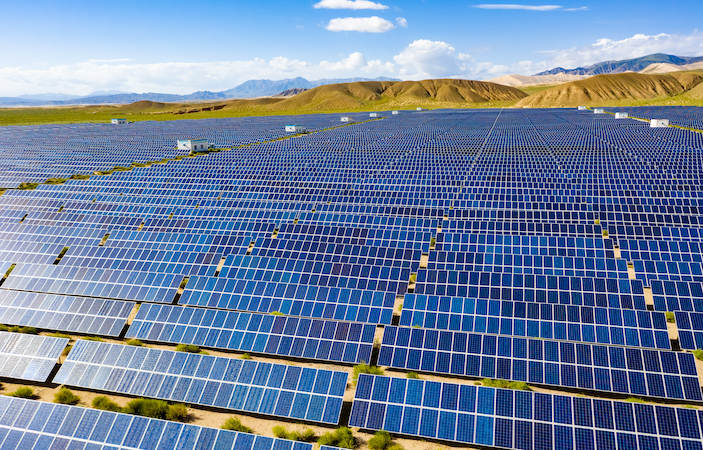
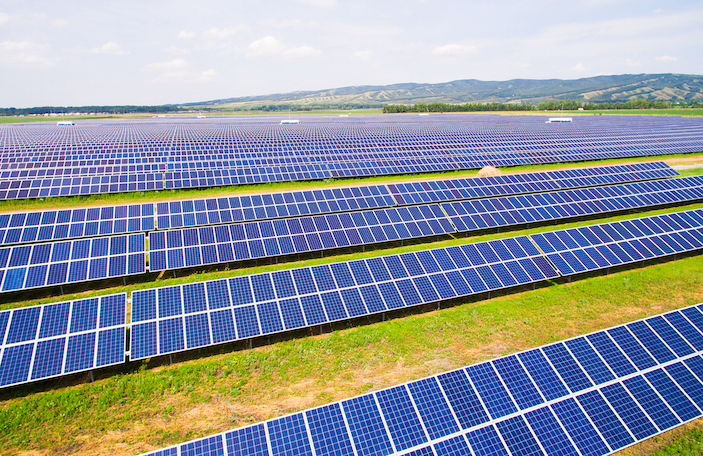
We are working on sites that produce gigawatts of energy. The biggest one in the Southern Hemisphere covers around 900 hectares (3.5 sq. mi) with 800,000 solar panels. You can’t manage the maintenance of a site like that with a spreadsheet.
Components that are built to last
70% of the world’s solar assets were built in the last five years. 97% of the components are made in China, the quality of which is often questionable. Solar cells are pretty fragile anyway and won’t perform the same way in any environment, which needs to be carefully considered if the asset is going to last.
How do drones help solar businesses overcome these challenges?
“Making any solar project viable is about generating as much energy as you can while keeping your operating costs as low as possible. This isn’t about skimping on maintenance – it’s about working smarter. Data-driven, smart maintenance is the future of solar.
“The health of a solar site is constantly changing. That means getting an accurate picture of what’s happening would be nearly impossible without our drones and software.
“Human labour is also one of the biggest costs in the solar industry. If you can only send someone out when you know what the problem is, that makes a huge difference.
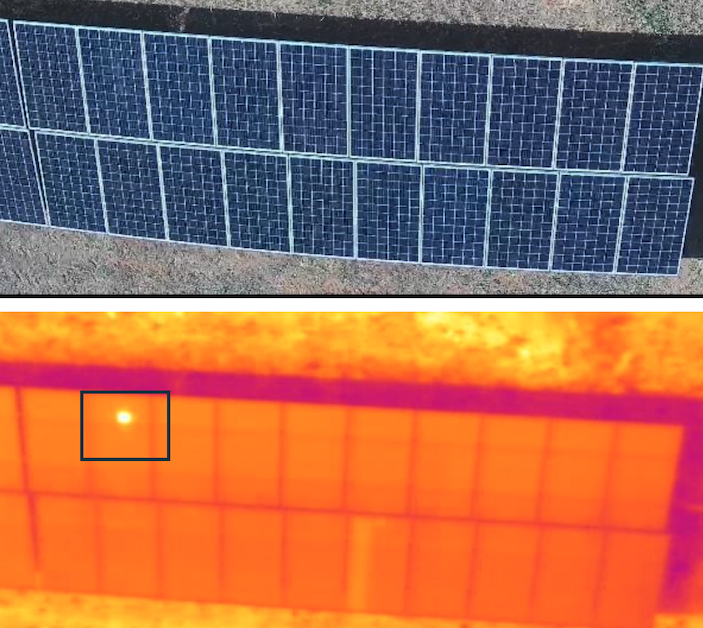
1. Reducing the cost of maintenance
Above’s drones capture high-resolution images and data across a solar site. Cutting-edge software is then used to identify defects inside individual solar cells.
2. Designing better solar sites
By building a detailed simulation of the terrain and light conditions at a proposed location, Above’s drones help optimise the design of new solar sites.
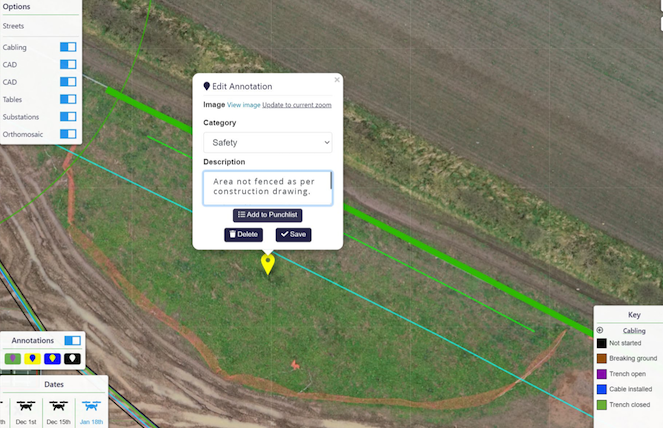
3. Building big and keeping quality high
Drones make it easy to track what is happening during the construction of a new solar site. They help identify potential problems, inform decisions about what components and skills are needed, and help businesses anticipate costs at each stage of a project.

Technological innovations are not enough
“These innovations and generating more of our energy from solar will make a huge difference in tackling climate change. But they are not enough on their own. The way we look at the problem also needs to change. It’s time to stop seeing the response required to tackle climate change in purely negative terms. Doing the right thing doesn’t need to only mean missing out on things we enjoy. Whether that’s flying, eating food out of season or not driving our cars.
“Most of us have also become disconnected from the systems that sustain us – and there’s a lot of evidence that suggests that is bad, not just for the environment, but also for our mental health and wellbeing.
“There’s a lot we can all do to help create the change we need; and the time to do it is now.”
Enjoyed this post?
Share it with your network below
Follow me on LinkedIn for all the latest updates
Learn more about Above at abovesurveying.com
I’m not paid by, or affiliated with, any organisation featured here. Views from people I interview are their own.

Related Posts


